Stop rewriting your prompts.
Start answering the model's questions.
别再翻来覆去写提示词了,
多去回答模型的问题.
EN A sharper prompt buys you one better output. A model that interviews you first collects the context that improves everything after it.
中 提示词打磨得再锋利,也只会为你换来某一次更好的输出。而先让模型在对谈中询问你,它收集到的上下文却能改善此后的每一次输出。
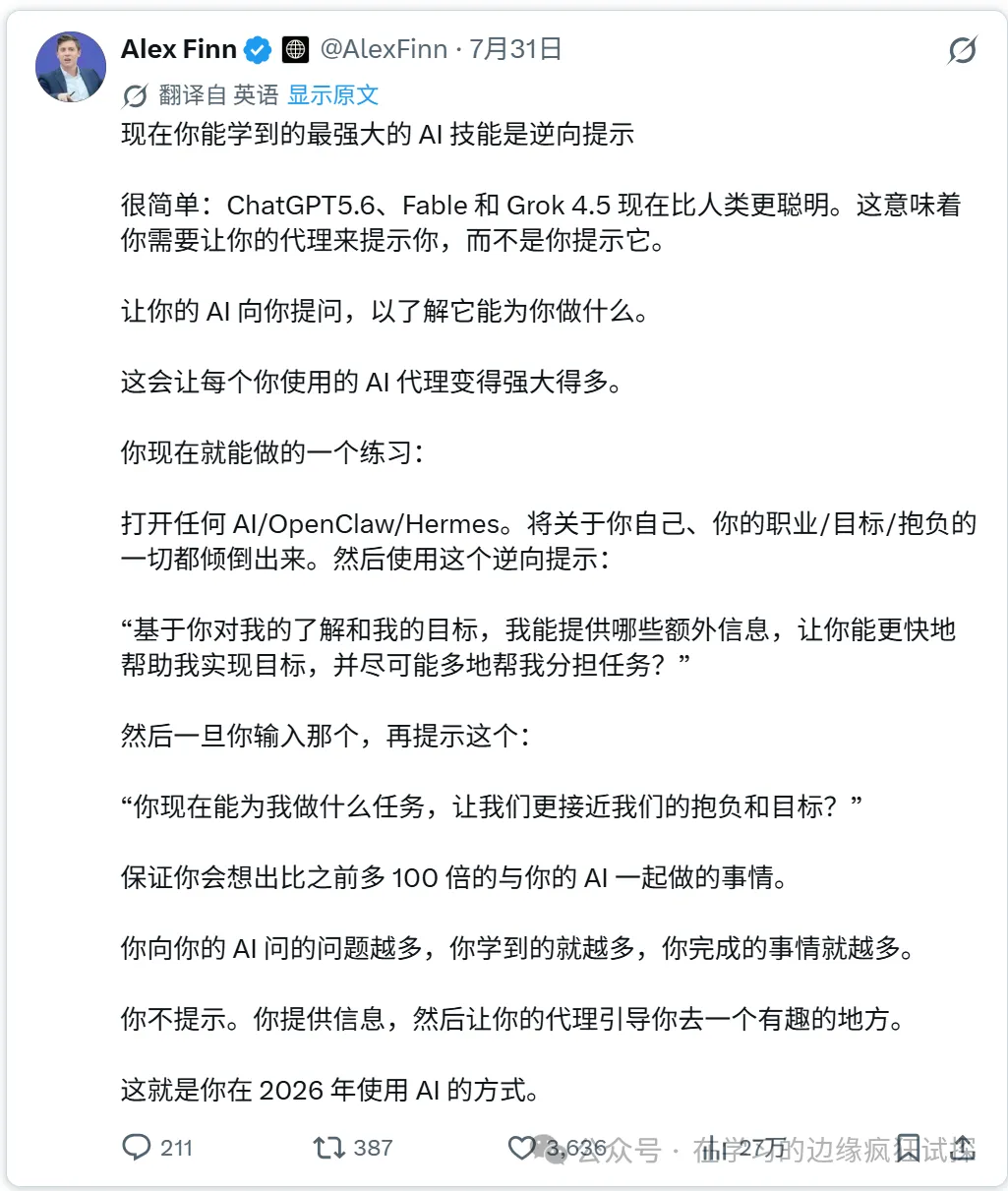
EN Alex Finn, the founder behind Creator Buddy, put a name on this in a July 31 post that carried the term across AI Twitter. His argument is that the models got capable enough that the bottleneck moved from their answers to your questions. His fix is reverse prompting, letting your AI ask you what it needs instead of guessing what to feed it.
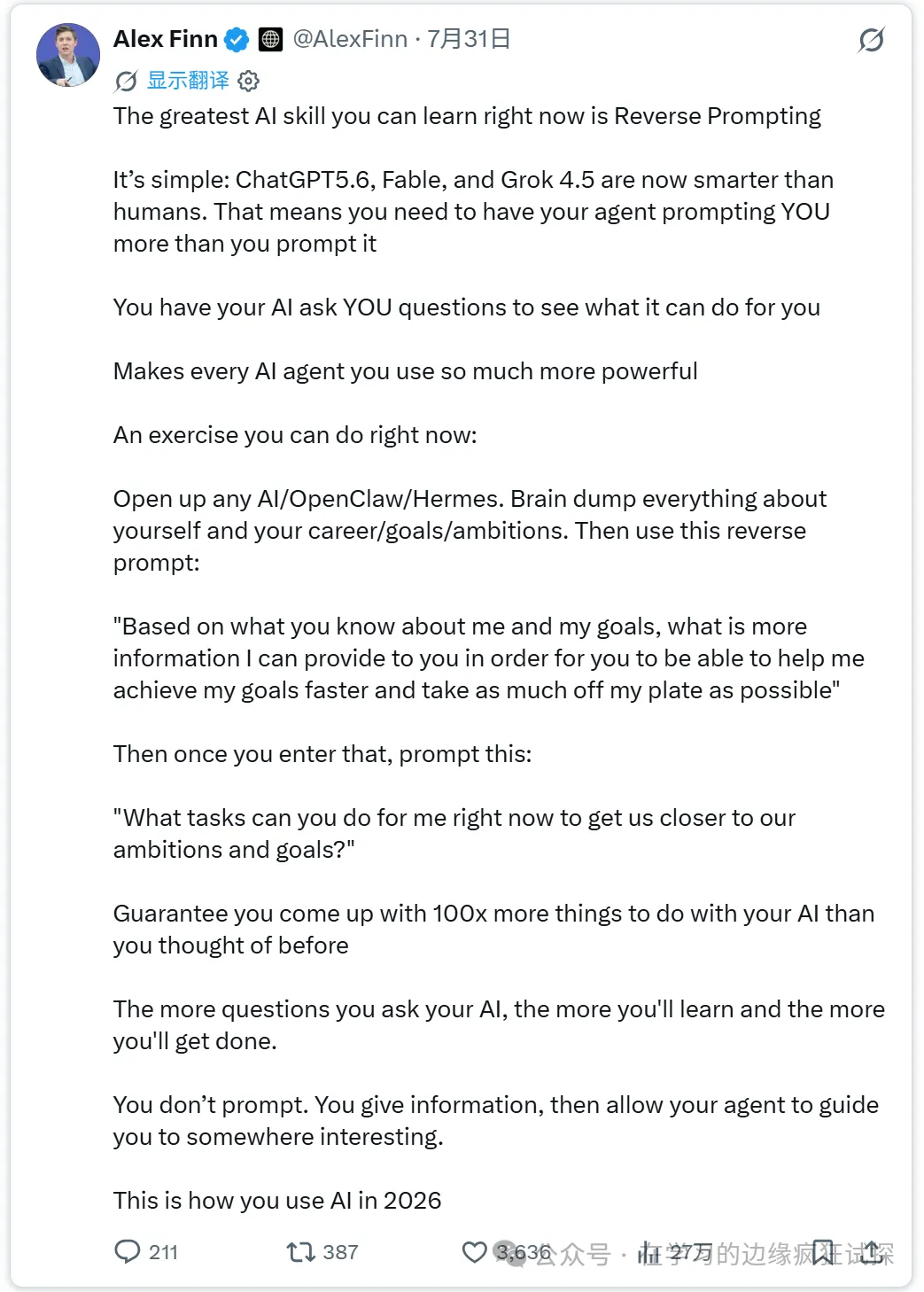
中 Creator Buddy 的创始人 Alex Finn 在 7 月 31 日的一篇帖子里给这种做法起了名字,并让这个说法在X平台的AI 圈广为流传。他认为,模型已经足够强大,能力瓶颈不再是取决于它们给出的答案,而是你提出的问题。解决办法就是“反身提示”:别再猜该给 AI 喂什么信息,让 AI 反过来询问它需要知道什么。
EN Nine researchers at Vanderbilt gave the same instruction from a different angle, three years earlier. Jules White and his colleagues published a catalog of 16 prompt patterns in February 2023, and one of them, the Flipped Interaction Pattern, is reverse prompting under a lab coat.
中 早在三年前,范德堡大学的九位研究者就从另一个角度提出了类似的思路。2023 年 2 月,Jules White 及其同事发布了一份包含 16 种提示模式的目录,其中的“翻转互动模式”(Flipped Interaction Pattern),其实就是学术语境下的“反身提示”。
EN Their version tells you to flip the conversation so the LLM drives it, because the model often picks better questions than you'd think to answer on your own. They called it an "inversion of control."
中 他们主张把对话翻转过来,让大语言模型掌舵,因为模型挑出的问题,往往比你自己想到要回答的问题更关键。他们把这称为“控制反转”(inversion of control)。
EN An influencer and an academic team landed on the same move without coordinating. Convergence like that usually marks a real technique, not a naming fad.
中 一位内容创作者和一个学术团队,在没有协调的情况下得出了同一种做法。这种不约而同通常意味着它是一项真正有效的技术,而不只是概念名目上的一阵风潮。
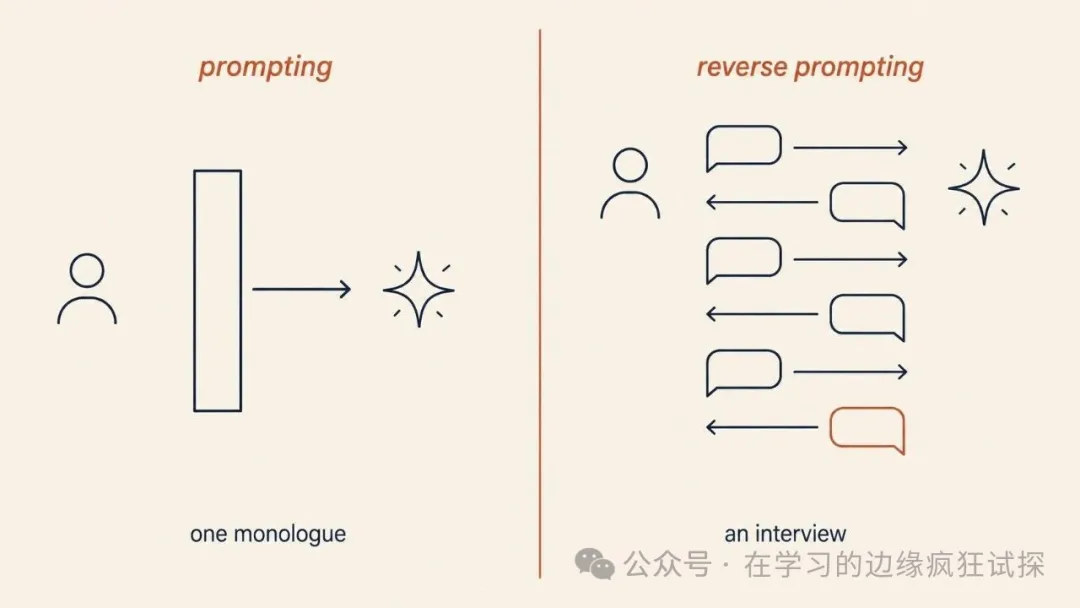
EN Reverse prompting is an interaction pattern. You give the model a goal, tell it to ask you questions until it has what it needs, and only then let it produce the work.
中 反身提示是一种互动模式。你先给模型一个目标,让它不断向你提问,直到掌握所需信息,然后才让它产出结果。
EN One naming collision to clear before we build. Researchers also use "reverse prompt engineering" for an unrelated practice, inferring from a finished AI output what prompt produced it. Useful field, different skill. This article covers the interview technique, the one on your feed.
中 在我们开始构建之前,需要先澄清一个命名上的冲突。研究人员也会使用“反向提示工程(reverse prompt engineering)”这个术语,指代另一种无关的实践:根据一个已经生成的 AI 输出结果,反推产生该结果的提示词(prompt)是什么。这是一项有价值的研究领域,但它与本文所讨论的技能不同。本文所讲更偏向于交互技巧,也就是你信息流(feed)里看到的那一种。
What reverse prompting actually is
反身提示究竟是什么#
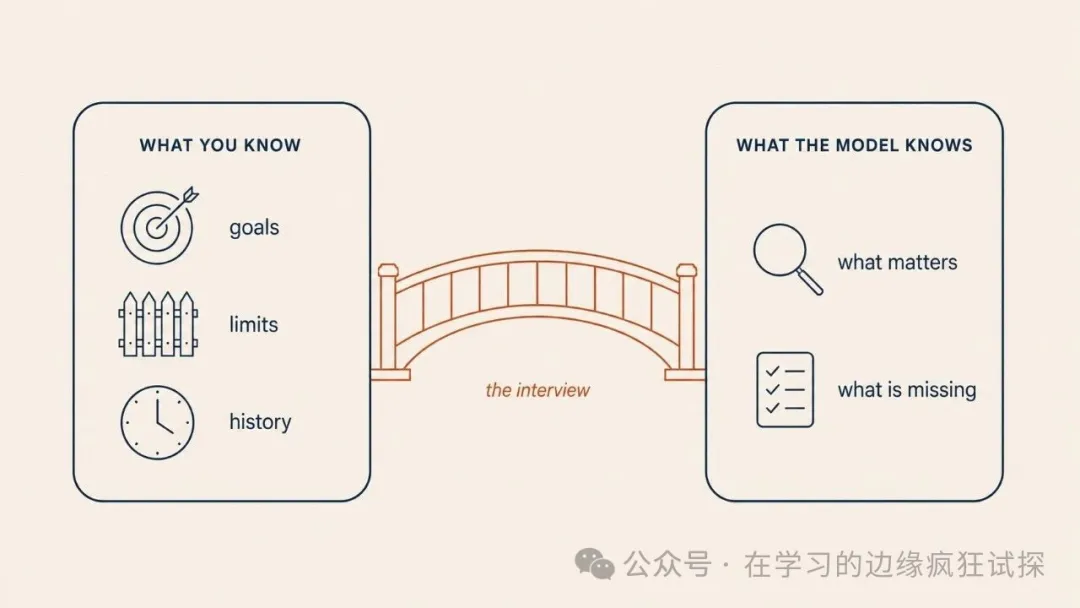
EN The Vanderbilt pattern works because the information gap between you and the model runs in both directions.
中 范德堡大学提出的模式之所以有效,是因为你和模型之间的信息差是双向的。
EN You know things the model doesn't, like your goals, your constraints, your audience, and the thing you tried last month that failed. The model knows which of those details change the output, and which details you skip because you didn't know they mattered.
中 你知道模型不知道的事,比如你的目标、限制条件、受众,以及你上个月试过却失败的方法。模型则知道,哪些细节会改变输出,哪些细节被你略过,只是因为你根本没有意识到它们很重要。
EN A normal prompt forces you to guess what to include. Reverse prompting hands that guess to the party better equipped to make it. The model asks, you answer, and by the end you've dictated a requirements document you never had to sit down and write.
中 普通提示词迫使你猜测该写进哪些信息。反身提示则把这项猜测交给更擅长判断的一方。模型提问,你来回答;到最后,你等于口述出了一份需求文档,而不用坐下来专门去撰写它。
EN White's team named two ingredients the pattern needs. The model needs a stated goal, so its questions stay aimed at something. The interaction needs a stopping condition, so the interview ends when the model has enough.
中 White 的团队指出,这种模式需要两个要素。第一,必须向模型说明目标,让它的问题始终有所指向。第二,这种互动必须设定停止条件,在模型掌握足够信息时再结束"对谈"。
EN Goal in, questions out, output when the questions run dry.
中 输入目标,得到问题;问题问尽,再让它输出。
Start with the one-line flip
先用一句话,把对话翻转过来#
EN The simplest version costs you one sentence. Take any task you'd normally prompt and append this line.
中 (去运用反身提示)最简单的办法,只需要多写一句话。把任何你原本会直接下提示的任务拿来,在末尾加上这一句:
EN Before you answer, ask me the questions you need to do this well. One at a time.
中 在回答之前,请先询问我(用户)在完成这项任务所需要回答的问题。一次只问一个。
EN That single line turns a guessing game into an intake session. Run it on the next task where your first instinct is to write three paragraphs of context. The model will ask about half of what you planned to include, plus two things you hadn't considered.
中 这一句很短的提示词,就能把猜谜游戏变成一次需求访谈。下次遇到一个让你本能地想先写上三段背景提示词的任务,就试试这种办法。模型大概会问到你原计划写入的一半内容,还会多问两件你从未考虑过的事。
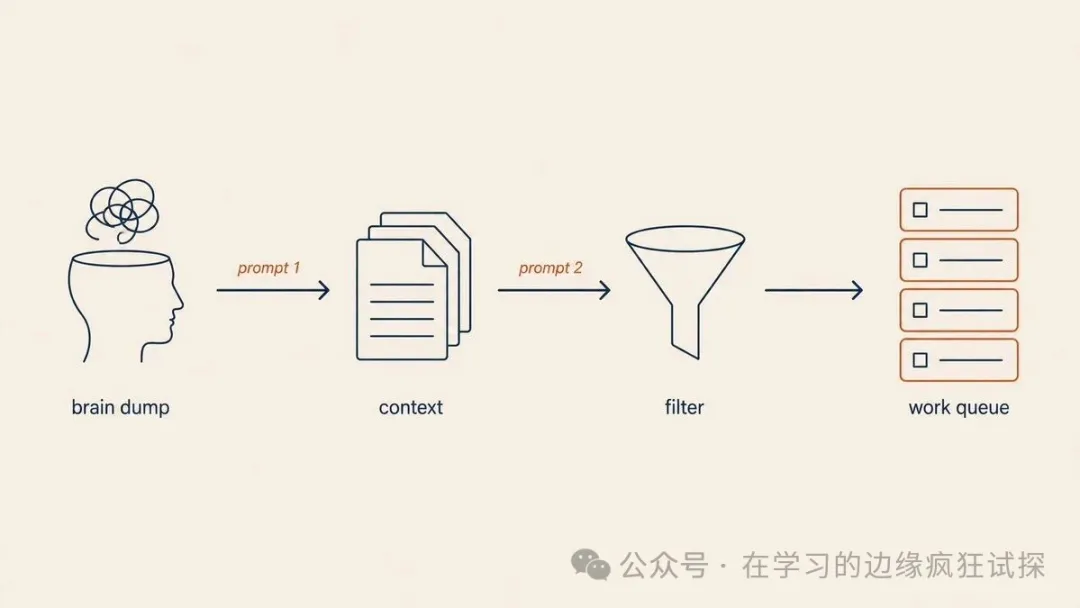
EN The wider version of the exercise traces back to Finn's post. Brain dump your goals, your career situation, and your current projects into the chat, then run these two prompts in sequence.
中 Finn 的帖子中提到了这个小技巧的拓展版本。你可以先把你的目标、职业现状和正在推进的项目一股脑倒进对话框,再依次使用下面两条提示词:
EN Based on everything I just told you, what else do you need to know to help me reach these goals faster?
中 根据我刚才告诉你的所有信息,为了帮助我更快实现这些目标,你还需要知道什么?
EN What tasks could you take off my plate right now to move me toward them?
中 为了推动我实现这些目标,你现在可以替我接手哪些任务?
EN The first prompt extracts context. The second converts that context into a work queue.
中 第一条提示用来提取上下文,第二条提示则把这些上下文转化为一份待办队列。
EN Run the pair once and you'll walk away with a task list you didn't have an hour earlier, drawn from the delegable work you'd mentally filed under "things only I can do."
中 把这两条提示跑一遍,你就会得到一份一小时前还不存在的任务清单。清单里的工作,正是那些本可委派、却一直被你在心里归入“只有我能做”的事项。
EN One guardrail before you scale this. Skip the 20-question intake ritual on day one. A question-first habit applied to your ambiguous tasks beats a folder of saved prompt templates, because templates freeze your best guess and the interview adapts to each task.
中 但在扩大使用范围前,需要先加一道护栏:别急着一开始就搞一套 20 个问题的访谈仪式。面对模糊任务时,养成“先提问”的习惯,比存满提示词模板的文件夹更有用。因为使用模板会把你当下最好的(直觉性的)点子给尘封掉,而对谈会适应每一个具体任务。
Make the flip permanent
让这种翻转成为默认设置#
EN The one-line version resets every chat. The compounding version lives in a standing instruction.
中 刚才谈到的一句话提示词版本,每开一轮新对话就要重来。(反身提示)能够产生复利的版本,则写在长期生效的常驻指令里。
EN Every major AI tool has a slot for persistent instructions, whether that's a custom instructions field, a project file, a system prompt, or a context document. Put the flip there.
中 主流 AI 工具都为持久化指令预留了位置,可能是自定义指令栏、项目文件、系统提示词或上下文文档。把“翻转对话”的规则放在那里。
EN For any task that is ambiguous or larger than a single output, interview me before producing anything. Ask one question at a time. Stop when you have what you need.
中 对于任何含义模糊、或无法用一次输出完成的任务,请在产出任何内容之前先采访我。一次只问一个问题。掌握所需信息后就停止提问。
EN Once that instruction persists, reverse prompting stops being a technique you remember and becomes the default shape of your sessions.
中 一旦这条指令长期生效,反身提示就不再是一项需要你刻意记住的技巧,而会成为每次对话的默认形态。
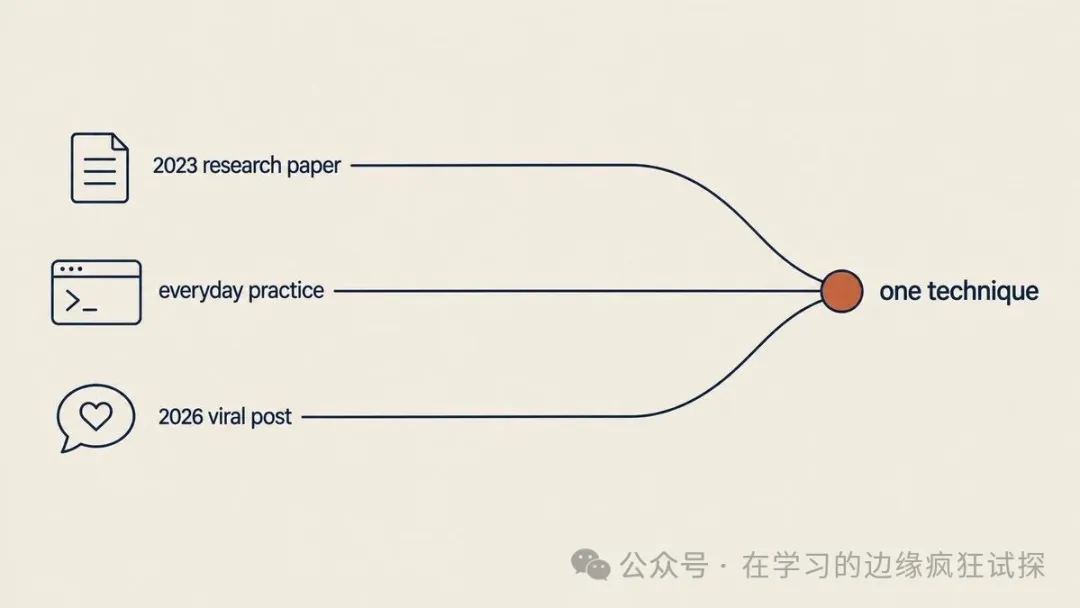
EN A developer writing under the handle taarimalta on DEV Community documented years of running this exact setup, and his April 2026 account is worth reading for one detail. He invented the technique on his own, named it reverse prompting on his own, and learned about the Vanderbilt paper mid-article because the AI interviewing him mentioned the academic literature.
中 DEV Community 上一位网名为 taarimalta 的开发者,记录了自己多年使用这套设置的经历。他在 2026 年 4 月的叙述里有一个细节很值得注意:他独立开发了这项技巧,也独立把它命名为“反身提示”;直到写文章写到一半,采访他的 AI 提到相关学术文献,他才知道范德堡大学那篇论文。
EN That's now three independent origins. Finn, White's team, and a developer who found it by using it.
中 于是,我们现在看到了三个彼此独立的源头:Finn、White 的团队,以及一位在实践中摸索出它的开发者。
EN His workflow adds course correction, the piece most people miss. When the model asks a wrong or lazy question mid-interview, he answers with a correction and extra context, and the session gets back on track. Steering the questions is part of the job, along with answering them.
中 他的工作流还加入了“纠偏”,而这正是大多数人忽略的一环。“对谈”途中,如果模型提出了错误或敷衍的问题,他会在回答时纠正它并补充上下文,让对话重新回到正轨。引导模型如何提问,和回答问题一样,都是你要做的工作。
What the interview sounds like in five fields
这种“对谈”在五个具体领域的展现#
EN The pattern is identical everywhere. The questions it surfaces aren't, and the questions are where the value hides.
中 这种模式可以“哪里需要往哪搬”,但(在不同情境下)它挖出来的问题各不相同,而价值恰恰藏在这些问题里。
EN Marketing. A strategist asks for a campaign plan. The model's third question was "What did the last campaign for this product spend per acquired customer, and what number makes this one a failure?" She asked for a plan. The model asked for a kill criterion, and the plan that came back had budget gates she wouldn't have specified.
中 第一,营销情境。一位策略师要求制定营销活动方案。模型提出的第三个问题是:“这款产品上一次活动的单客获取成本是多少?这一次达到什么数字就算失败?”她要的是一份方案,模型却追问了终止标准。最终生成的方案因此设置了预算关卡,而这是她自己不会主动写明的。
EN Software. A developer asks for a data-processing script. Question two from the model was "What should happen when a row is malformed, skip it, halt, or log and continue?" That question separates a demo script from one that survives real input, and it's the requirement developers forget to state because the happy path is the only one they picture.
中 第二,软件开发。一位开发者要求编写数据处理脚本。模型的第二个问题是:“遇到格式错误的行时,应该跳过、停止,还是记录日志后继续?”这个问题划清了演示脚本与能扛住真实输入的脚本之间的界线。开发者往往只设想一切顺利的路径,所以最容易忘记说明这项需求。
EN Teaching. Flipped interaction already has a research track record in classrooms, where it powers student-driven peer questioning instead of static Q&A. A teacher planning a unit gets asked what misconception students usually arrive with. The lesson that follows targets the misconception instead of restating the textbook.
中 第三,教学情景。翻转互动在课堂中已经有研究积累:它让学生主导同伴提问,而不是停留在静态问答。教师在设计一个教学单元时,模型会追问学生通常带着什么误解进入课堂。随后生成的课程便会瞄准这个误区,而不是复述教科书。
EN Client work. A freelance designer pastes in a client brief and asks the model to interview her before drafting concepts. The fourth question was "The brief says 'modern but timeless.' Which existing brand does the client point at when they say that?" That question is the project. The model asked it in the first five minutes instead of revision round three.
中 第四,客户项目。一位自由设计师把客户简报贴进对话框,要求模型先采访她,再起草创意概念。第四个问题是:“简报里说‘现代但经得起时间考验’。客户说这句话时,指的是哪个现有品牌?”这个问题就是整个项目的关键。模型在前五分钟就问了出来,而不是等到第三轮修改时才暴露。
EN Your own week. The task-audit pair from earlier, run on a Sunday, goals in first, then the plate-clearing prompt. The output that surprises people is the boring middle layer, the follow-up emails, the meeting prep documents, the first drafts of recurring reports, sitting in plain sight the whole time.
中 第五,日常工作。你可以每天运行前面那组“任务盘点”提示:先输入目标,再问 AI 能替你接手什么。真正让人意外的,往往是那些乏味的中间层工作——跟进邮件、会议准备材料、周期性报告的初稿,而它们一直明晃晃地摆在眼前。
EN Five fields, one pattern. In each case, the question that mattered was one the human wouldn't have volunteered. That's the working test. A good interview should make you pause at least once.
中 五个不同领域,可以打通同一种模式。在每个案例里,真正重要的问题都不是人会主动交代的。这就是检验方法是否有效的标准:一次好的”对谈“,至少应该让你停下来想一想。
Know when to flip back
什么时候该切回普通提示?#
EN Reverse prompting fails in two predictable ways.
中 逆向提示在两种特定的情况下会失效。
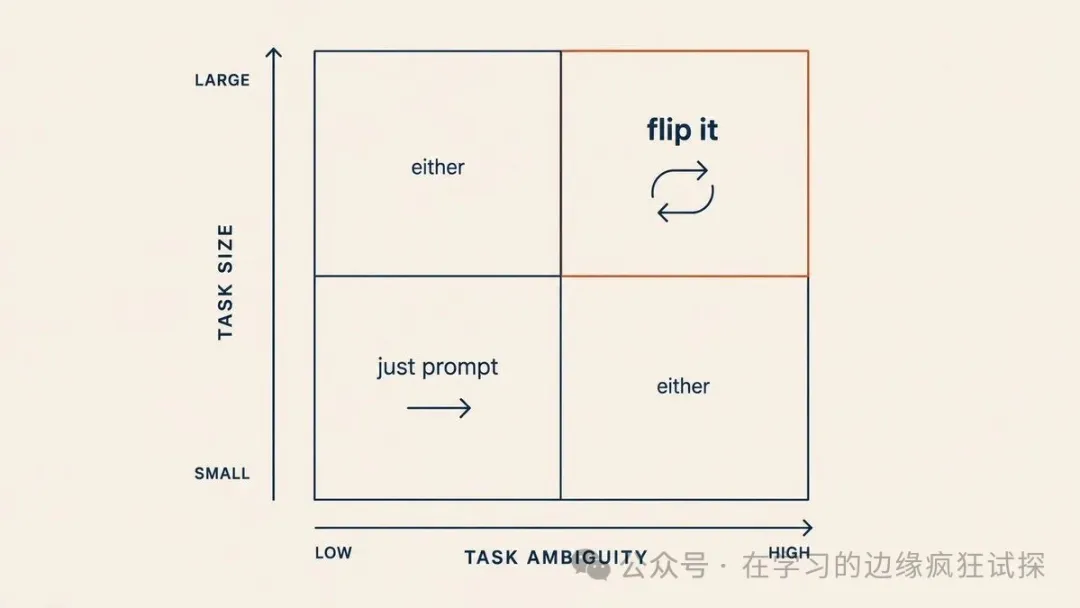
EN Short, unambiguous tasks gain nothing from an interview. "Rewrite this sentence" plus three clarifying questions costs you three turns and returns nothing.
中 短小、明确的任务不会从”对谈“中得到任何好处。面对“改写这句话”的目标去追问三个澄清性的问题,只会多耗三轮对话,而毫无回报。
EN Taarimalta conceded the point when the AI interviewing him pushed back on his claim that the technique never backfired. A method that works for everything is a suspicious claim, and the interview pays off on tasks with enough ambiguity or scope to justify it.
中 当 taarimalta 与他的 AI对谈中,AI 反驳他“这项技巧从未适得其反”的说法时,他也承认了这一点。声称一种方法适用于所有事情,本身就值得怀疑。只有任务的模糊程度或规模足以抵消”对谈“获取上下文的成本时,对谈才划算。
EN Interviews also drift. Left unsteered, a model can burn turns on obvious questions or wander off the goal. Each fix is already on the page. State the goal, set a stopping condition, take one question at a time, and correct course when a question misses.
中 “对谈”也可能会跑偏。无人引导时,模型可能把轮次浪费在显而易见的问题上,或逐渐偏离目标。不过解决办法前面都已经写过:明确目标,设置停止条件,一次只问一个问题;问题没问到点上时,及时纠偏。
EN As a rule of thumb, flip when the task is fuzzy, big, or new, and prompt normally when it's small and precise. Telling the two apart takes about a week of practice, because the feedback is immediate. A wasted interview is obvious by question two.
中 实际的经验法则是:当任务模糊、庞大或陌生时,就采用翻转对话的反身提示;任务小而精确时,就正常下提示。实践大约一周,你就能分清两者,因为反馈来得很快。一次毫无必要的“对谈”,通常到第二个问题时就已经暴露无遗。
What your job becomes
这将如何改变你的工作流?#
EN You stop performing a strange ritual of the prompt era, sitting in front of a system built for dialogue and composing a perfect monologue at it. The prompt box stops feeling like a blank page, because the opening move is no longer yours to author. You state a goal and answer what comes back.
中 你不再重复提示词时代那套古怪仪式:坐在一个为对话而生的系统面前,苦心为它写出一篇完美独白。提示框也不再像一张令人发怵的白纸,因为开场不再需要由你精心创作。你只需说明目标,然后回答模型抛回来的问题。
EN The skill that compounds from there is self-knowledge. The interview is only as good as your answers, and you get more out of every question when you know your goals, constraints, and taste well enough to state them.
中 从这里开始,产生复利的能力的最重要来源是自我认知。采访的质量取决于你的回答;当你足够了解自己的目标、限制和品味,并能把它们说清楚时,每个问题都能为你带来更多价值。
EN Prompt libraries depreciate with every model release. Knowing what you want doesn't.
中 每发布一代新模型,提示词库都会贬值;(但作为主体)知道自己想要什么,却不会。
EN The thinking still belongs to you. What drops away is the transcription of that thinking into prompt format, and your attention moves to the work that needs a human. You judge the answers, steer the interview, and decide what ships.
中 思考(的主体性)依然属于你。消失的只是把思考誊写成提示词格式的劳动,而你的注意力会转向真正需要人来完成的工作:判断答案、把控对谈并决定最终交付什么。
EN Two people who never met, an academic team in 2023 and a builder in 2026, handed you the same instruction.
中 两个从未见过面的人——一个 2023 年的学术团队和一位 2026 年的产品建造者——给了你同一条指令。
EN The best prompt you'll write this year ends with a question mark pointed at you.
中 你今年写出的最佳提示词,会以一个指向你自己的问号结尾。
EN Start this week, and you're a quarter ahead of everyone still polishing monologues.
中 这周就开始实践,你会比那些仍在打磨独白的人领先整整一个季度。
EN LLMs don't think, you do.
中 大语言模型不会(真正意义上的)思考,真正思考的人是你。